
Drive
Add harmonics with a waveshaper.
PreviewNot built for macOS, Windows or Linux
Choose the harmonic produced by the distortion.
Engine preview
Not built for macOS, Windows or Linux
Polynomial waveshaping with the Chebyshev family. Feed it a sine and it emits one chosen harmonic instead of the smear a drive curve gives you, a distortion whose knob is a number of the harmonic series rather than an amount of grit.
Every row below is a recorded build row or the recorded absence of one. Nothing here is inferred from what this module is meant to support.
| Format | Result | Download |
|---|---|---|
| Browser package (JS) | Not built by this module's lane this module has no release.json; its packager lane records no browser program rows | Not built for the browser |
| Browser package (WASM) | Not built by this module's lane this module has no release.json; its packager lane records no browser program rows | Not built for the browser |
| VST3 | Not built no recorded artifact row for vst3; native-lane-report.json is absent or records no vst3 row for this module | Not built for macOS, Windows or Linux |
| Audio Unit | Not built no recorded artifact row for au; native-lane-report.json is absent or records no au row for this module | Not built for macOS |
| CLAP | Not built no recorded artifact row for clap; native-lane-report.json is absent or records no clap row for this module | Not built for macOS, Windows or Linux |
| Standalone app | Not built no recorded artifact row for standalone; native-lane-report.json is absent or records no standalone row for this module | Not built for macOS, Windows or Linux |
Parity
No lane recorded an artifact; there is no parity evidence.
Start from a named sound, then adjust the instrument to make it yours.
The exact normalized graph packaged for the shared browser/native runtime and exports.
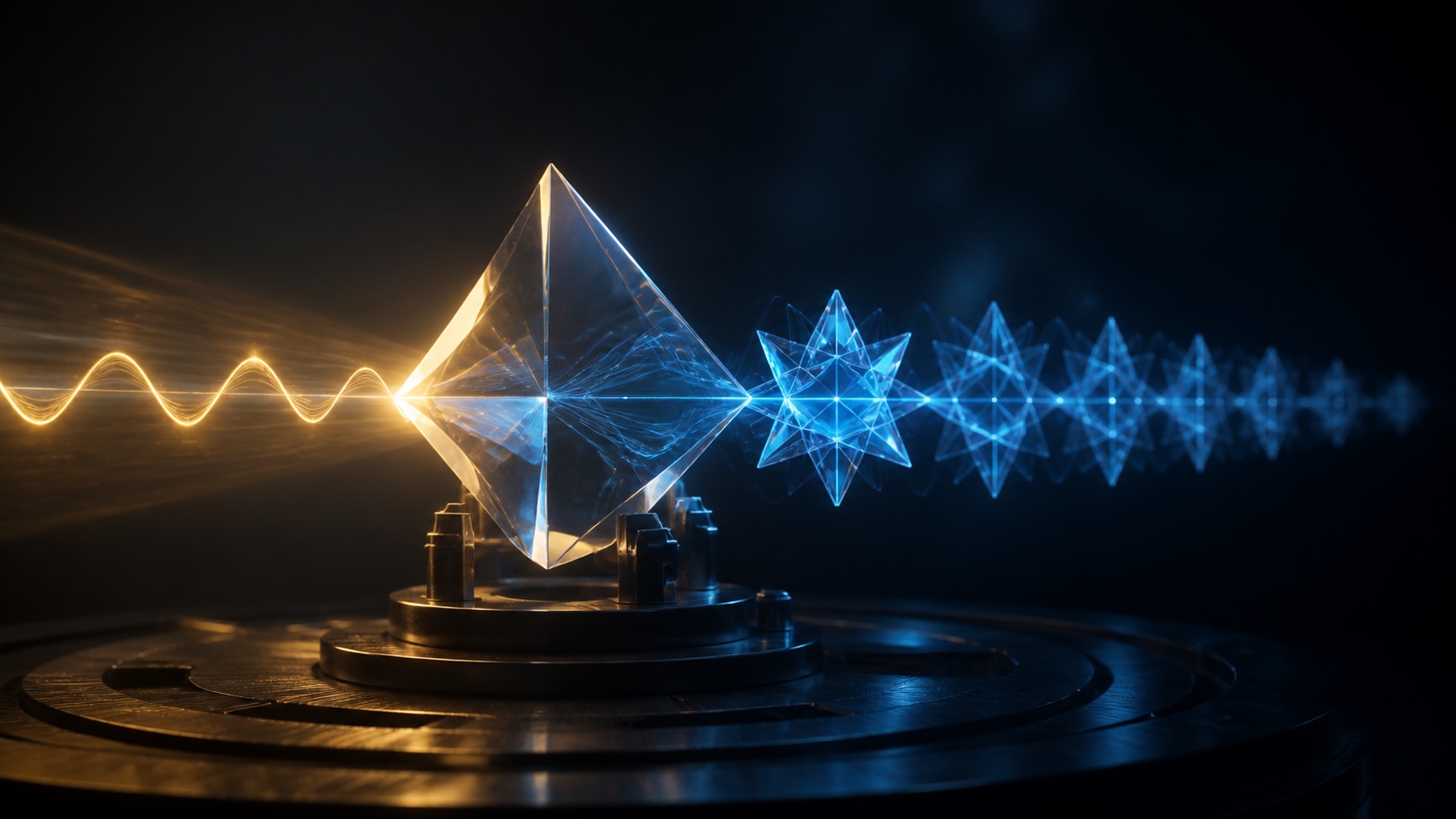
The Chebyshev polynomial of the first kind has one property that makes it useful here: Tn(cos θ) equals cos(nθ). Push a pure sine through the order-n polynomial and what emerges is the nth harmonic, alone and at full level. That is why Order reads as a harmonic number rather than as an amount, it is not choosing how hard to distort, it is choosing what to produce.
Even and odd orders behave differently, and the difference is audible before it is theoretical. An even polynomial is symmetric about the vertical axis, so it maps positive and negative input to the same output and rectifies the waveform, the fundamental largely disappears and the result sits an octave up. An odd one preserves the sign of its input, so the waveform stays symmetric, the fundamental survives underneath, and the added harmonic reads as colour on the original note rather than as a replacement for it.
Real input is not a pure sine, and the clean harmonic identity does not survive it. Every partial in a chord goes through the same curve, and their sums and differences come with it, so what you hear at high orders is a dense inharmonic colouring rather than a tidy transposition. Single sustained notes are where the property is legible.
A high-order curve is extremely steep, order 50 crosses zero fifty times across the input range, which is exactly the shape that aliases badly at base rate. The browser preview runs the waveshaper at 4x oversampling for that reason, which is what makes the upper half of the order range usable rather than a wash of foldover.