OSC-1
A complete synth built from separate modules.
PreviewNo build recorded
Periodic amplitude modulation with stereo phase control.
Engine preview
Not built for macOS, Windows or Linux
A stage of OSC-1. It works the same on its own page as it does in the chain, same parameters, same paths.
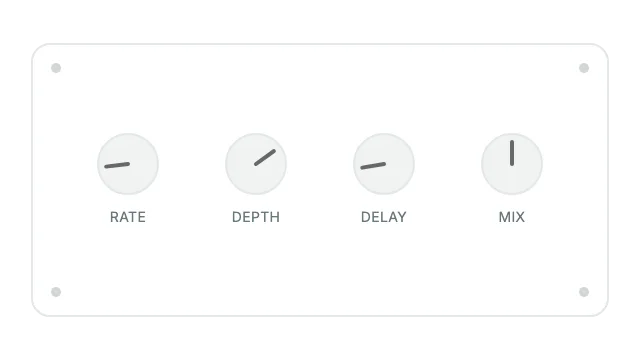
Amplitude modulation with rate, depth and a stereo phase offset. The oldest effect on the list and still the one that turns a held chord into a part.
Every row below is a recorded build row or the recorded absence of one. Nothing here is inferred from what this module is meant to support.
| Format | Result | Download |
|---|---|---|
| Browser package (JS) | Not built by this module's lane this module has no release.json; its packager lane records no browser program rows | Not built for the browser |
| Browser package (WASM) | Not built by this module's lane this module has no release.json; its packager lane records no browser program rows | Not built for the browser |
| VST3 | Not built no recorded artifact row for vst3; native-lane-report.json is absent or records no vst3 row for this module | Not built for macOS, Windows or Linux |
| Audio Unit | Not built no recorded artifact row for au; native-lane-report.json is absent or records no au row for this module | Not built for macOS |
| CLAP | Not built no recorded artifact row for clap; native-lane-report.json is absent or records no clap row for this module | Not built for macOS, Windows or Linux |
| Standalone app | Not built no recorded artifact row for standalone; native-lane-report.json is absent or records no standalone row for this module | Not built for macOS, Windows or Linux |
Parity
No lane recorded an artifact; there is no parity evidence.
Start from a named sound, then adjust the instrument to make it yours.
A sine LFO at Rate scales the signal level between 1 and 1 minus Depth. Spread offsets the right channel's LFO phase, so at 180 degrees the two channels trough alternately and the effect reads as movement across the stereo field rather than pumping.
That spread is a real control rather than a documented intention. The channels are split and given their own gain stage and their own LFO, and the phase offset is baked into each LFO's wavetable rather than applied by delaying one of them, both start at the same instant and stay locked, so the offset survives any rate change. The input is forced to two channels on the way in, which is what makes the spread audible on a mono source instead of collapsing back into plain amplitude modulation.
Ported from the plugin's tremolo, including the pass-through-when-disabled behaviour: the LFO keeps running while the stage is bypassed, so re-enabling it does not restart the cycle from zero.